Circumscribed or spiculated?
Compare patterns on the same page and connect image details with the terms in the lexicon.
From image to description. From description to assessment category. Study with side-by-side comparisons, visual sequences, and 50 simulated cases with explanations.
A margin, a distribution, a finding that does not fit the others. Interpretation becomes harder when the image, descriptor, and assessment category seem disconnected.
See how the material connects these steps →Compare patterns on the same page and connect image details with the terms in the lexicon.
Study the path from description to classification with structured comparisons and explanations.
Interpret a simulated case yourself. Then review the answer and the explanation of the reasoning.
This is page 4 of the Comparative Atlas. See how the images, descriptors, and key difference appear together, without switching between separate explanations.

The Atlas presents circumscribed and spiculated margins on the same page. Simulated images bring comparison into your study.
Descriptors accompany each image. The key difference helps you connect what you see with the terms used to describe it.
The same page highlights a pitfall and a reading sequence. Refer to the comparison and work through the reasoning in an organized way.
These samples come from the PDFs in this offer. Open the book and explore the carousels; tap a page to read it and zoom in on the details.
Selected pages from the library. Open the book and use the arrows to explore the topics. Tap a carousel page to enlarge it.
Follow a sequence and return to the points you need to review, instead of collecting disconnected images.
Observe the image and its context. Review technique, breast composition, and the search for findings.
Connect shape, margin, distribution, and other descriptors with what you see in the image.
Study how descriptors and the overall assessment connect with the final category.
Integrate mammography, ultrasound, and context into your reasoning and report structure.
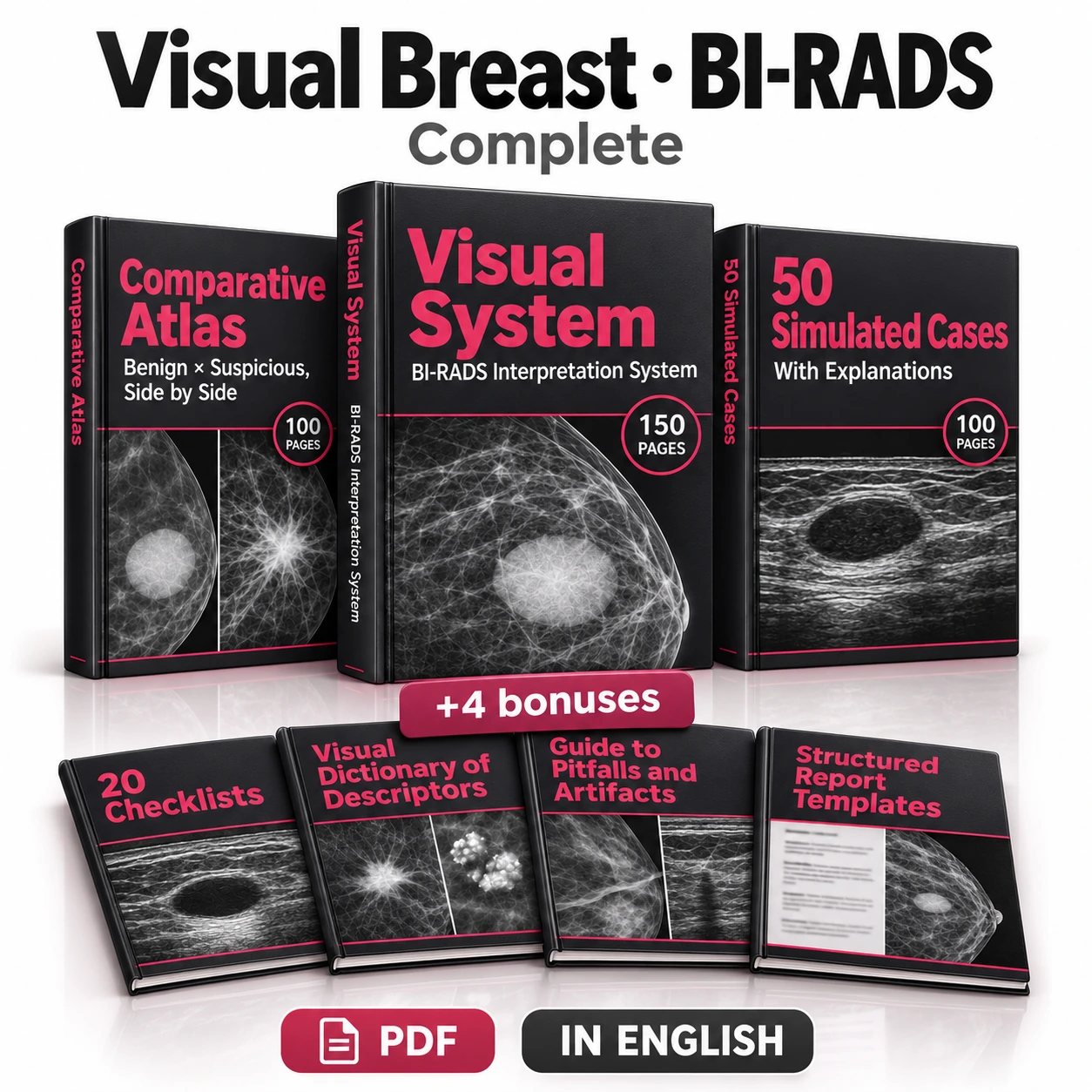
350 pages with complementary roles: build your foundation, see the differences, and practice your reasoning.

Study breast composition, masses, calcifications, asymmetries, architectural distortion, and ultrasound. The sequence connects the BI-RADS lexicon, categories 0 through 6, special situations, and report structure.
PDF PAGE · COMPARATIVE ATLASPaired findings organize the descriptors on each side, the key difference, and comparison pitfalls. Return to the pair that addresses your question and review what changes between the images.
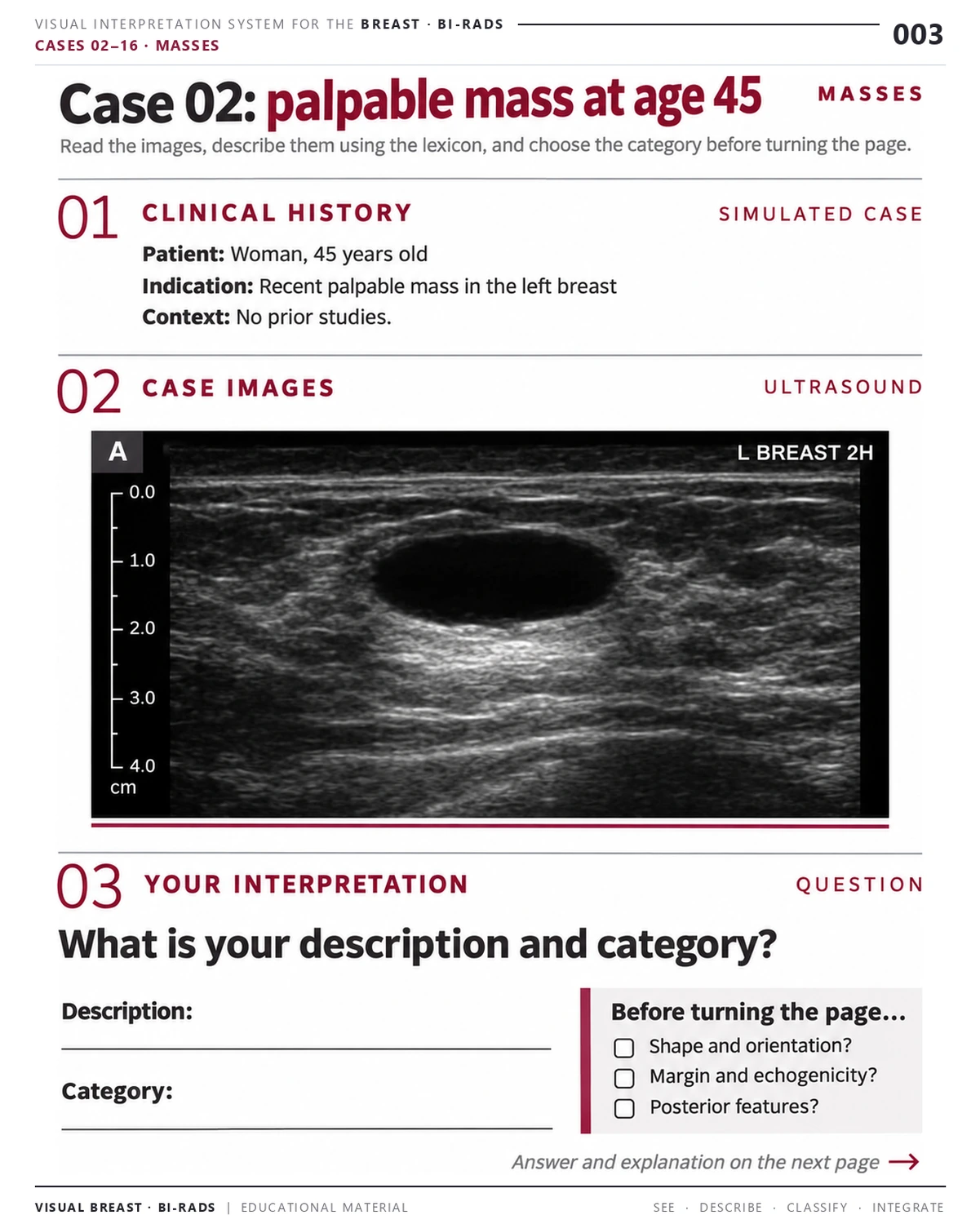 PDF PAGE · SIMULATED CASES
Practice description and classification with simulated histories and images. Review the answer, its explanation, and why another category was not chosen. The first case provides a worked example to guide your study.
Independent educational material. It does not replace medical training, the official ACR atlas, guidelines, or institutional protocols.
Four bonuses with 80 additional pages to revisit the sequence, look up descriptors, and study report writing.

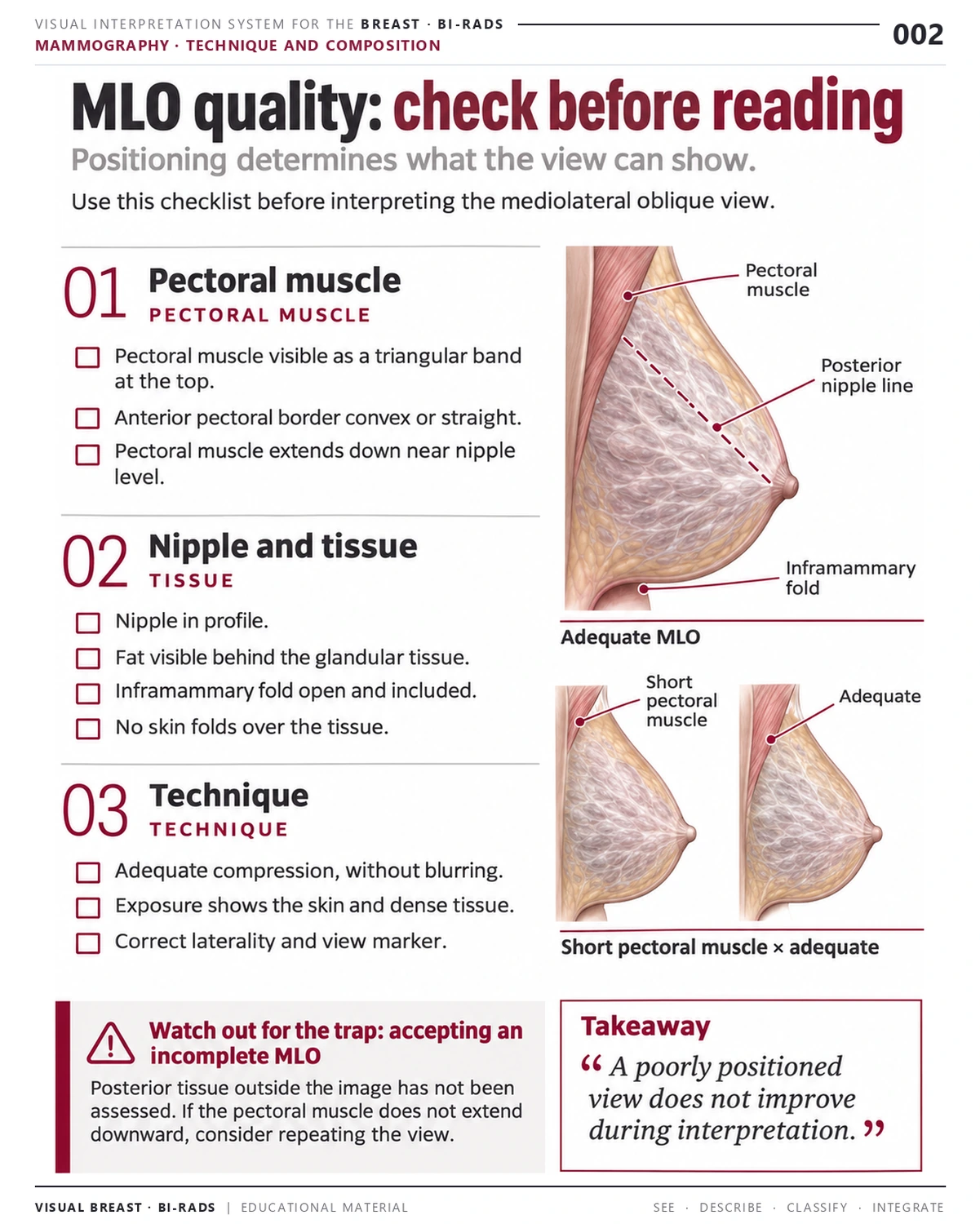
Checklists to review technique, breast composition, findings, and a structured approach to mammography and ultrasound interpretation.
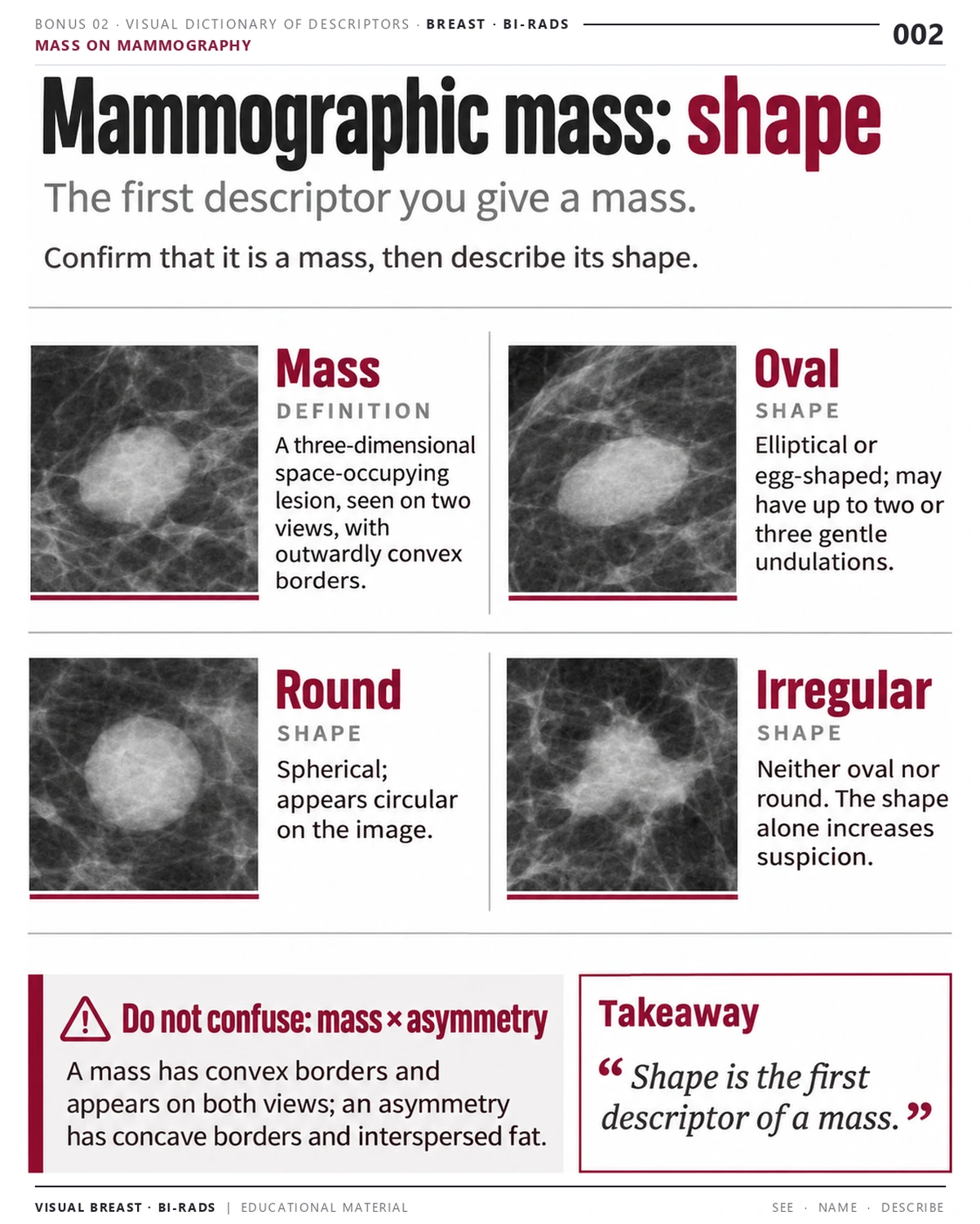
An illustrated reference to look up vocabulary and connect terms such as shape, margin, and orientation with images.
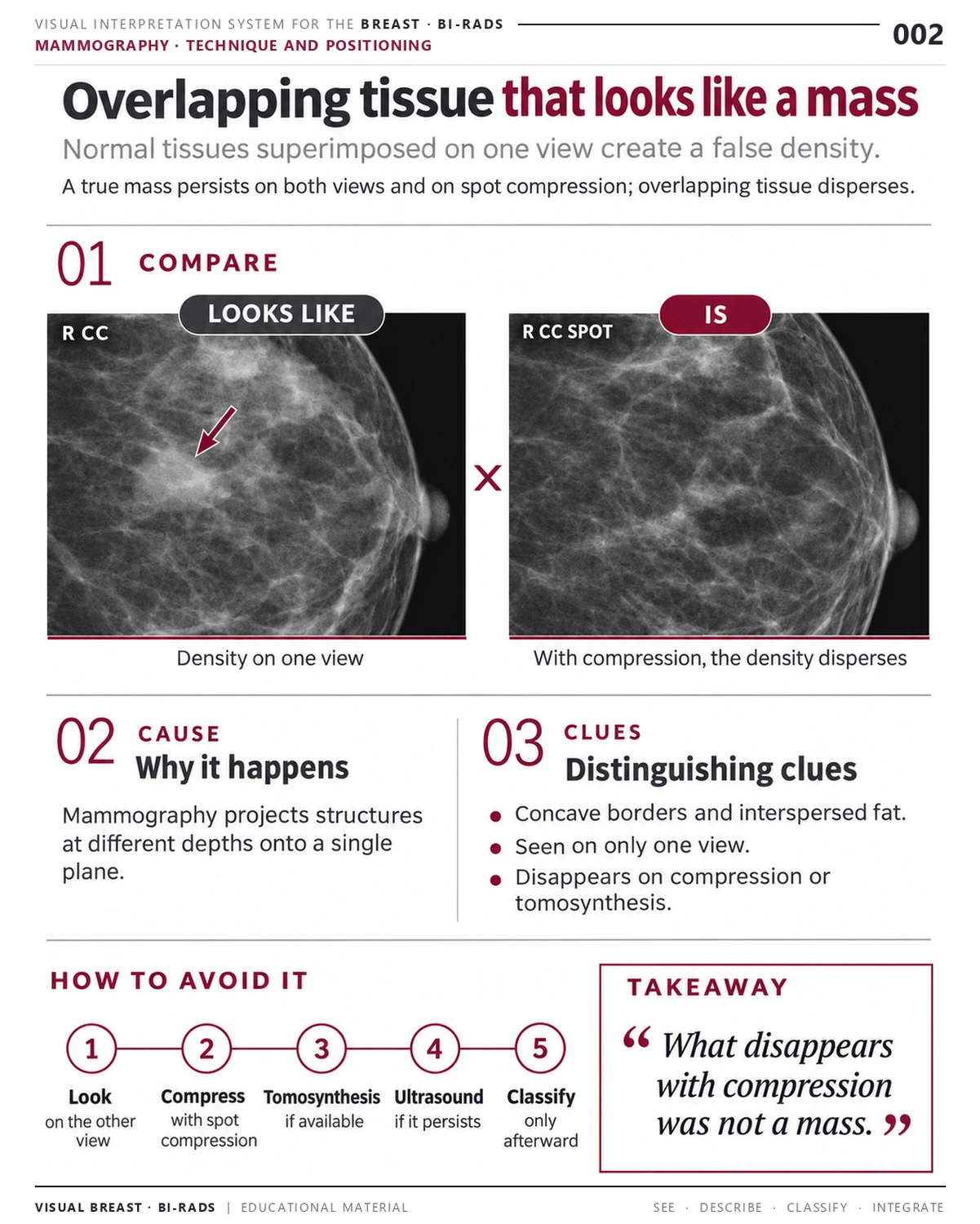
Comparisons to study tissue superimposition, the effects of technique, and situations that can complicate interpretation.
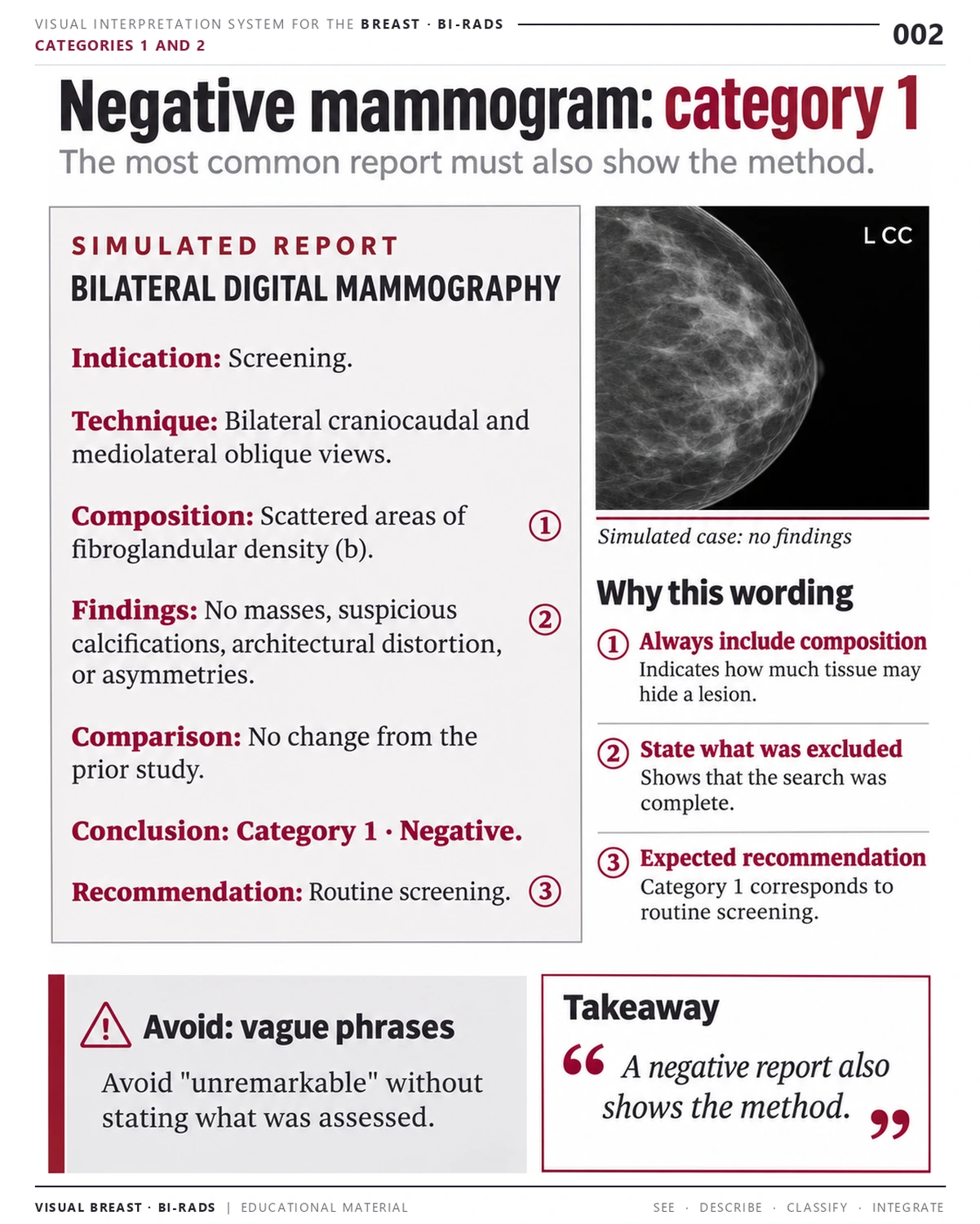
Simulated examples with explanations to study report structure, description using the lexicon, and consistency of the conclusion.
Both options include the three core resources. Complete adds four tools for reference and review.
Three resources to understand, compare, and practice.
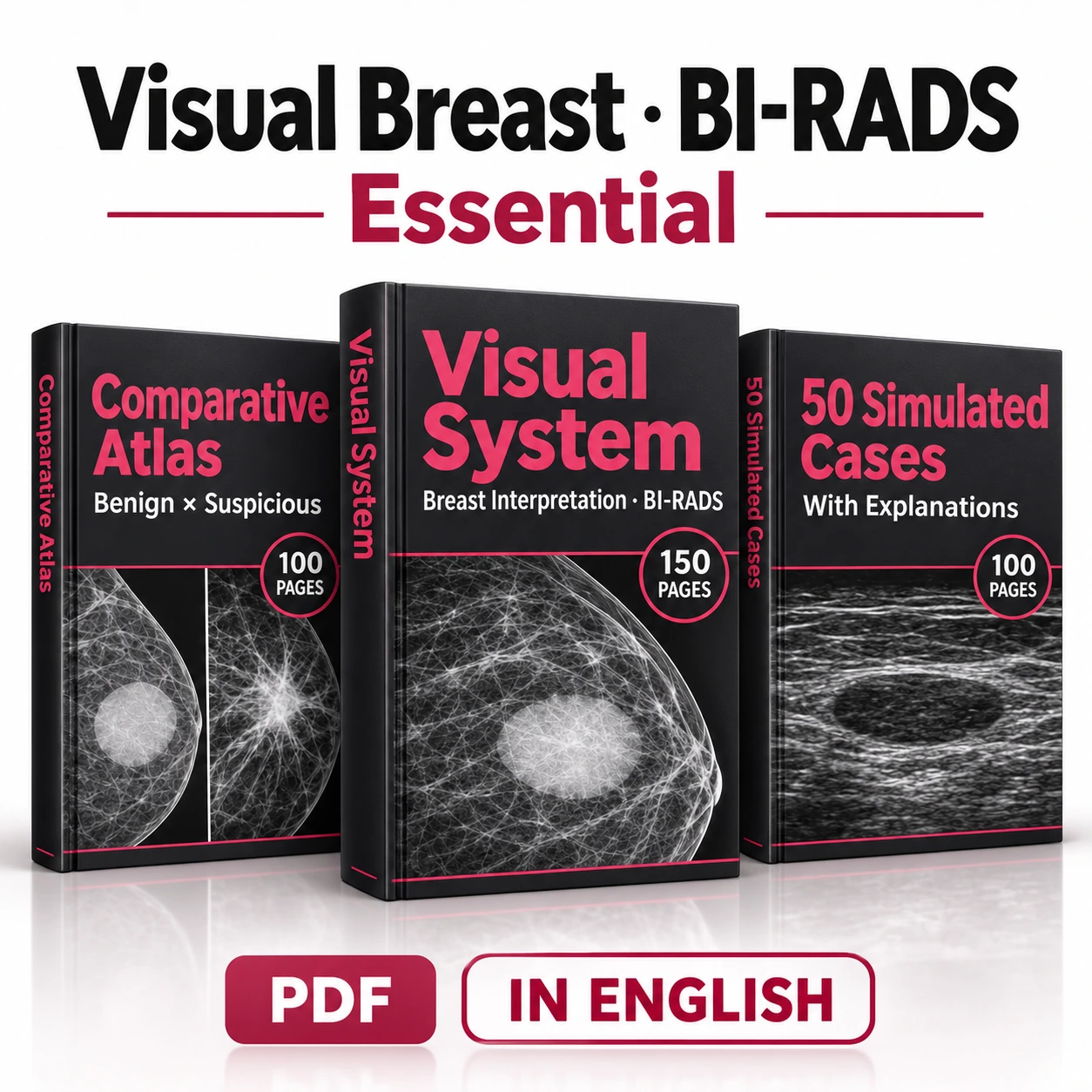
The complete study sequence, with resources for reference and review.
for US$ 5 moreReview the sequence, descriptors, and report writing.
Get the Complete Library →Digital material · EnglishDigital materials in English. Mockups illustrate the PDFs; no physical items are shipped. Additional guides sold separately are not included in the packages above.
Content, format, and differences between the two options.
Essential includes the 150-page Visual BI-RADS Interpretation System, the 100-page Comparative Atlas, and 50 Simulated Cases with Explanations in 100 pages. That is 350 pages across the three core resources. Complete adds four 20-page bonuses: 430 pages in seven PDFs.
Four resources for reference and review: 20 Checklists, Visual Dictionary of Descriptors, Guide to Pitfalls and Artifacts, and Structured Report Templates. Both options include the same three core resources.
The content is intended for medical professionals and residents. The Visual BI-RADS Interpretation System starts with the fundamentals and lexicon. Follow the sequence, return to the Atlas comparisons, and then practice interpretation with the cases.
The material follows a sequence: observe, describe, classify, and integrate. Study images and descriptors, compare pairs, and review explained answers instead of consulting only a list of categories.
Yes. The previews come from the PDFs in this offer. The interactive book and carousels show selected pages; tap the carousel pages to enlarge them.
No. The cases and images are simulated for educational purposes. They support study and practice in interpretation.
No. This is independent educational material. It does not replace the official ACR atlas, medical training, guidelines, or your institution's protocols.
These are PDF files in English for a phone, tablet, or computer with a compatible reader. Use zoom or a larger screen to examine details. The books and devices in the mockups represent digital products; no physical items are shipped.
This offer is a PDF study library. It does not include video lessons or professional certification.
The three additional 50-page guides are separate products. They are not part of the Essential or Complete Library presented on this page.